
Choosing an affiliate niche is not simply about finding the largest market or the highest advertised commission. A strong niche combines sustained audience demand, suitable affiliate programmes, commercially viable payout models, and a subject that the publisher can cover with credibility.
This guide examines ten affiliate niches with active consumer or business demand. It compares the opportunities available in each category, the products affiliates can promote, and the factors that may affect performance.
Market growth does not guarantee affiliate revenue. Results depend on traffic quality, search intent, programme terms, conversion rates, competition, geography, compliance requirements, and the quality of the content used to promote each offer.
For a head start, check out our Trackier Affiliate Marketing Solutions to see how top programs track, optimize, and scale effectively.
What Are Affiliate Niches?
An affiliate niche is a specialized segment of the market where you promote targeted products. Focusing on the best affiliate niches allows you to build authority, lower your advertising costs, and increase your conversion rates by speaking directly to a specific audience.
Choosing the right niche helps you target the right audience, create relevant content, and increase the chances of earning commissions. Without a clear niche, your efforts can end up scattered, making it harder to stand out in a competitive market.
The right niche also determines which affiliate programs you can join. For example, if you focus on health and wellness, you can promote supplements, fitness apps, or wellness subscriptions. If your niche is technology, software tools, or SaaS products may be a better fit.
Picking a profitable niche ensures your time and marketing resources lead to real revenue.
When selecting affiliate niches, consider three factors: market demand, audience interest, and potential profitability.
What Are the 10 Most Profitable Affiliate Niches?
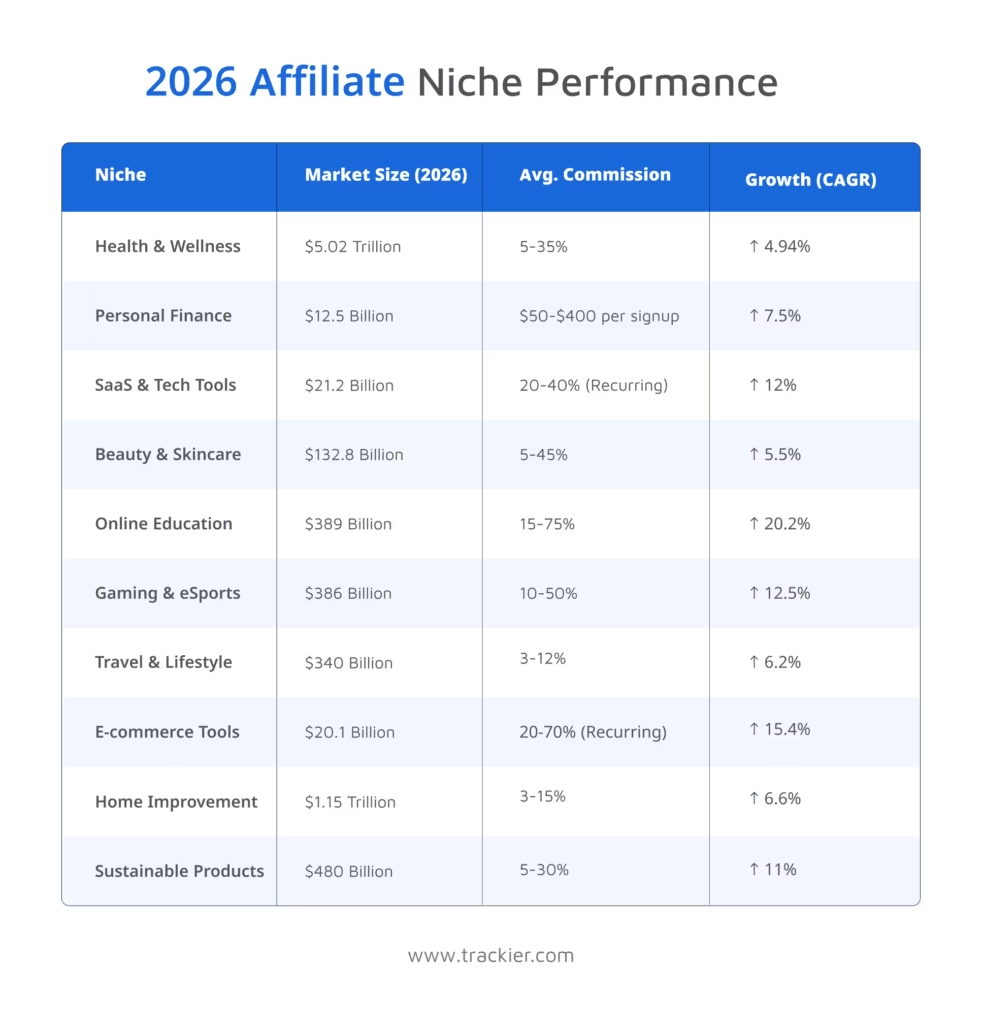
The affiliate marketing industry is experiencing unprecedented growth, with over 80% of brands now utilizing affiliate marketing programs and businesses earning an average of $12 for every $1 spent on affiliate marketing. Selecting the right niche is crucial for maximizing your revenue potential.
Here’s a breakdown of the top 10 most profitable affiliate niches, as per current data and trends:
1. Health and Wellness
Health and wellness remains a broad affiliate niche because demand extends across nutrition, fitness, sleep, personal care, wearables, wellness apps, and subscription-based services.
According to PwC’s Voice of the Consumer 2026, 80% of surveyed consumers use an app or wearable for at least one health and wellness activity. The study also found that 40% consider improving sleep one of their top health goals.
These behaviours create opportunities for publishers that can explain products clearly, compare their practical features, and avoid unsupported medical or therapeutic claims. Common payout models include a percentage of an approved product sale, a fixed amount for a qualified subscription or lead, and recurring revenue share for eligible apps or memberships.
Sub-niches: Sleep technology, fitness apps, wearables, nutrition products, personal care, healthy ageing, fitness equipment, stress-management tools, and wellness subscriptions.
Sub-niches: Sleep optimization, stress management apps, superfoods and supplements, sustainable wellness products, alternative medicine, fitness equipment, and mental health tools.
2. Personal Finance and Investment (The Finance Affiliate Niche)
Personal finance is commercially relevant as more consumers use digital accounts, payment services, savings products, and financial-management tools.
The World Bank’s Global Findex 2025 reports that 79% of adults globally now have a financial account. It also found that 40% of adults in developing economies saved through a financial account in 2024, representing a 16-percentage-point increase from 2021.
Affiliate opportunities include budgeting tools, credit-monitoring services, tax software, insurance comparison, financial education, and regulated fintech products. Financial education can also cover resources that explain how debt relief works, helping consumers better understand potential options for managing significant debt. Promoting privacy and financial safety tools like identity theft protection represents a high-conversion opportunity within this space as consumers seek to safeguard their personal assets. Programmes may pay for an approved lead, completed application, funded account, subscription, or another validated action.
Finance affiliates must follow the financial-promotion, disclosure, and advertising requirements applicable in each market. Content should not promise approval, investment returns, savings, or financial outcomes.
Sub-niches: Budgeting apps, credit-monitoring services, tax software, insurance comparison, regulated investment platforms, savings products, financial education, and business-finance tools.
3. Technology and Software (The SaaS Affiliate Niche)
Technology and software is an established affiliate niche because businesses and consumers increasingly rely on subscription-based digital products to manage recurring tasks.
Gartner forecasts worldwide IT spending to reach $6.31 trillion in 2026, an increase of 13.5% from 2025. Software spending alone is forecast to reach approximately $1.44 trillion, representing 15.1% growth.
Relevant categories include AI tools, cybersecurity, cloud services, productivity platforms, employee monitoring software like Time champ, CRM software, analytics, web hosting, and marketing automation. SaaS affiliate programmes commonly use one-time acquisition payments, recurring revenue share, or hybrid payout models.
Before joining a programme, affiliates should compare its attribution window, renewal policy, minimum payout, refund treatment, commission duration, and rules for existing customers.
Sub-niches: AI-powered software, productivity tools, web hosting, cybersecurity, CRM systems, analytics, cloud services, marketing automation, and creator software.
4. Beauty and Skincare
Beauty and skincare is a large consumer category with strong visual-discovery and repeat-purchase potential.
McKinsey’s State of Beauty 2026 forecasts that the global beauty market will grow by approximately 5% annually and reach $590 billion by 2030. McKinsey also notes that product discovery and purchase are increasingly moving toward creators, social platforms, and digital marketplaces.
This creates opportunities for affiliates that publish demonstrations, product comparisons, routine-based content, and detailed guidance for specific customer needs. Product descriptions and performance claims should remain accurate, particularly where beauty products overlap with dermatology, health, or therapeutic concerns.
Sub-niches: Skincare by concern, hair care, fragrance, men’s grooming, K-beauty, beauty devices, sensitive-skin products, refillable beauty, and lower-waste personal care.
5. Online Education and E-Learning
Online education remains relevant as employers and workers respond to continuing changes in technology, job requirements, and professional skills.
The World Economic Forum’s Future of Jobs Report 2025 found that 85% of surveyed employers plan to prioritise workforce upskilling. It also identified skills gaps as a major barrier to business transformation for 63% of employers.
Affiliate opportunities include professional certificates, language learning, software training, test preparation, tutoring, business education, and subscription-based learning platforms. Programmes may offer a percentage of an approved course sale, a fixed amount for an enrolment, or recurring commissions for an active subscription.
Affiliates should evaluate course quality, accreditation, learner outcomes, cancellation policies, and current programme terms before recommending a provider.
Sub-niches: Professional certification, language learning, software training, test preparation, tutoring, business education, creative skills, and workforce-development platforms.
6. Gaming and eSports
Gaming is a substantial global market with affiliate opportunities across hardware, digital products, subscriptions, accessories, and creator equipment.
Newzoo reported in June 2026 that global games revenue reached $201.6 billion in 2025, an increase of 9.1% year over year. Mobile games generated $113.3 billion, while the total market is forecast to reach $234.4 billion by 2028.
Affiliate economics differ considerably within this niche. Hardware may carry a high order value but a comparatively narrow margin, while eligible software, subscriptions, and digital services may use fixed or recurring payouts.
Affiliates should also verify geographical availability, platform restrictions, age requirements, trademark rules, and whether a digital marketplace permits affiliate promotion.
Sub-niches: Gaming PCs and components, peripherals, gaming chairs, streaming equipment, game subscriptions, approved digital storefronts, creator tools, and gaming software such as gaming VPN.
7. Travel and Lifestyle
Travel remains a relevant affiliate niche because customers conduct high-intent research across accommodation, transport, insurance, activities, connectivity, and travel products.
According to UN Tourism, approximately 1.52 billion international tourists were recorded globally in 2025, almost 60 million more than in 2024.
Travel affiliate programmes commonly pay a percentage of a completed booking or a fixed amount for another qualifying action. Affiliates should compare cancellation and refund rules, geographical coverage, attribution windows, booking-validation periods, and when a commission becomes payable.
Because customers often compare several websites before booking, content should provide practical destination, cost, timing, and eligibility information rather than relying on generic promotional descriptions.
Sub-niches: Accommodation, flight and rail comparison, travel insurance, tours and activities, luggage, eSIMs, airport services, travel gear, and destination-specific planning.
8. E-commerce Tools
E-commerce tools overlap with SaaS, but they address a distinct set of operational needs across storefront management, payments, inventory, fulfilment, analytics, customer service, and retention.
Gartner’s April 2026 IT spending forecast places worldwide software spending at approximately $1.44 trillion and IT-services spending at approximately $1.87 trillion in 2026.
Affiliates can add value by publishing implementation guides, workflow demonstrations, integrations, pricing comparisons, and product comparisons for specific merchant types. Programmes may offer one-time, recurring, or hybrid commissions, depending on the product and customer plan.
Evaluate free-trial rules, plan eligibility, renewal commissions, attribution periods, and whether the programme pays for self-serve and sales-assisted customers.
Sub-niches: E-commerce platforms, payment tools, email and retention software, analytics, customer-support tools, inventory management, fulfilment systems, conversion optimisation, and subscription management.
9. Home Improvement and DIY
Home improvement and DIY supports affiliate content across tools, furnishings, smart-home products, security, gardening, storage, repair supplies, and project education. However, current market growth should be described as moderate rather than exceptional.
The Harvard Joint Center for Housing Studies reported in May 2026 that year-over-year US spending growth on owner-occupied home improvements and maintenance is projected to slow to 0.5% by the first quarter of 2027.
The niche can still support high-intent content because customers frequently research product compatibility, dimensions, safety, installation, durability, and price before purchasing. Affiliates should account for seasonality, shipping costs, returns, regional availability, and the lower margins associated with some physical products.
Sub-niches: Power tools, repair supplies, home security, smart-home devices, storage, lighting, gardening, furnishings, renovation planning, and DIY education.
10. Sustainable and Eco-Friendly Products
Sustainable products can support a focused affiliate niche, but sustainability should not be presented as a guarantee of purchase or conversion.
McKinsey noted in April 2026 that many consumers value sustainability and may pay a premium in some categories. However, willingness to pay varies significantly according to the product, price, and benefit. Sustainability alone often does not overcome established habits, price sensitivity, or performance expectations.
Affiliates should therefore focus on specific customer needs and clearly explain practical benefits such as durability, energy efficiency, refillability, repairability, reduced waste, or lower operating costs.
Environmental claims should be checked carefully. Avoid terms such as “eco-friendly,” “green,” “carbon neutral,” or “sustainable” unless the advertiser provides clear evidence explaining the basis of the claim.
Sub-niches: Refillable personal care, reusable household products, energy-efficient devices, refurbished electronics, repairable goods, lower-waste packaging, sustainable fashion, and home energy products.
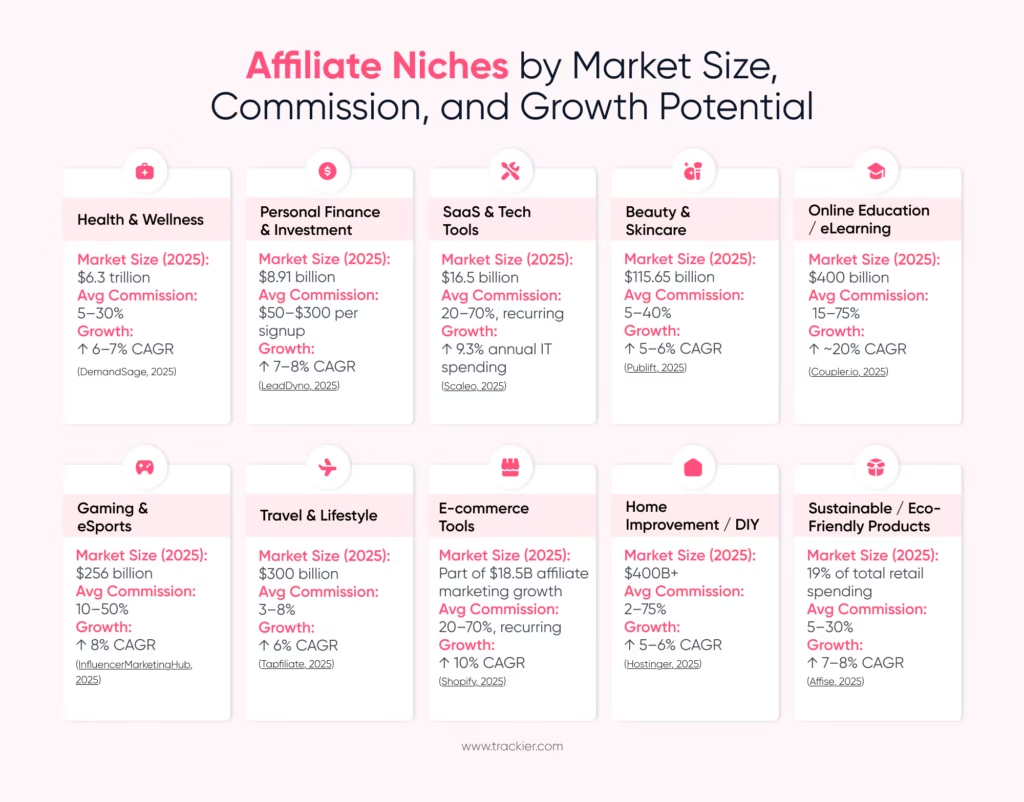
How to Pick the Best Affiliate Niches for Your Business
Choosing the right affiliate niches is one of the most important decisions you’ll make. It shapes your earning potential, influences the type of audience you attract, and affects how quickly you can scale. The good news is you don’t need to guess. By looking at a few key factors strategically, you can narrow down a niche that’s both profitable and a good fit for your business.
1. Understand Your Audience and Their Needs
Start by identifying who you want to reach and what they care about. A niche is only valuable if it solves real problems or matches real interests. If your audience is made up of small business owners, SaaS tools, payment gateways, or email marketing platforms might resonate more than beauty products. If you focus on Gen Z audiences, wellness, personal finance apps, or eco-friendly brands may perform better.
Look for niches where demand and intent are clear, for instance, people searching for “best budgeting app” or “best skincare for sensitive skin” are already considering a purchase. Building content around these intent-rich topics can significantly boost your affiliate conversions.
2. Validate Market Demand with Data
Before committing, check whether the niche has consistent interest and growth potential. You can use tools like Google Trends or keyword research platforms to see if search volume is stable or rising. Market reports are also a good indicator.
Also, pay attention to seasonality. A travel niche might spike in summer, while fitness and wellness peak in January. Choosing a category with year-round demand ensures more predictable revenue.
3. Compare Payout Models and Programme Terms
Do not evaluate a niche only by its highest advertised commission percentage.
A lower percentage on a high-value product may generate more approved revenue than a higher percentage on a product with weak conversion, frequent refunds, or a low average order value.
Compare:
- Payout model, such as cost per sale, lead, acquisition, or recurring revenue share
- Average order or subscription value
- Conversion and approval rates
- Refund, cancellation, and reversal rules
- Attribution window
- Commission duration
- Minimum payout threshold
- Restrictions for existing customers
- Geographic eligibility
- Earnings per click, where reliable data is available
Use the advertiser’s current official programme terms. Commission rates and eligibility rules can change without notice.
4. Assess Competition and Content Saturation
Highly profitable niches usually attract more affiliates, but too much competition can make it harder to rank and convert. Search for top keywords in your potential niche and see how strong the existing content is. If the space is dominated by major publishers, you may need a more specific angle, for example, instead of “fitness,” focus on “home fitness equipment for beginners.”
Micro-niches often have lower competition and more targeted audiences, which can make them more profitable in the long run despite being smaller.
5. Align With Your Expertise and Brand
Finally, consider your own knowledge and credibility. Promoting products in a niche you understand deeply makes content creation easier and builds trust with your audience. Affiliates who genuinely know their topic can create more helpful reviews, tutorials, and recommendations, and audiences are more likely to convert when they sense authenticity.
Picking the right affiliate niches is about finding the balance between demand, profitability, competition, and personal alignment. When those factors line up, you position yourself to lead in the market.
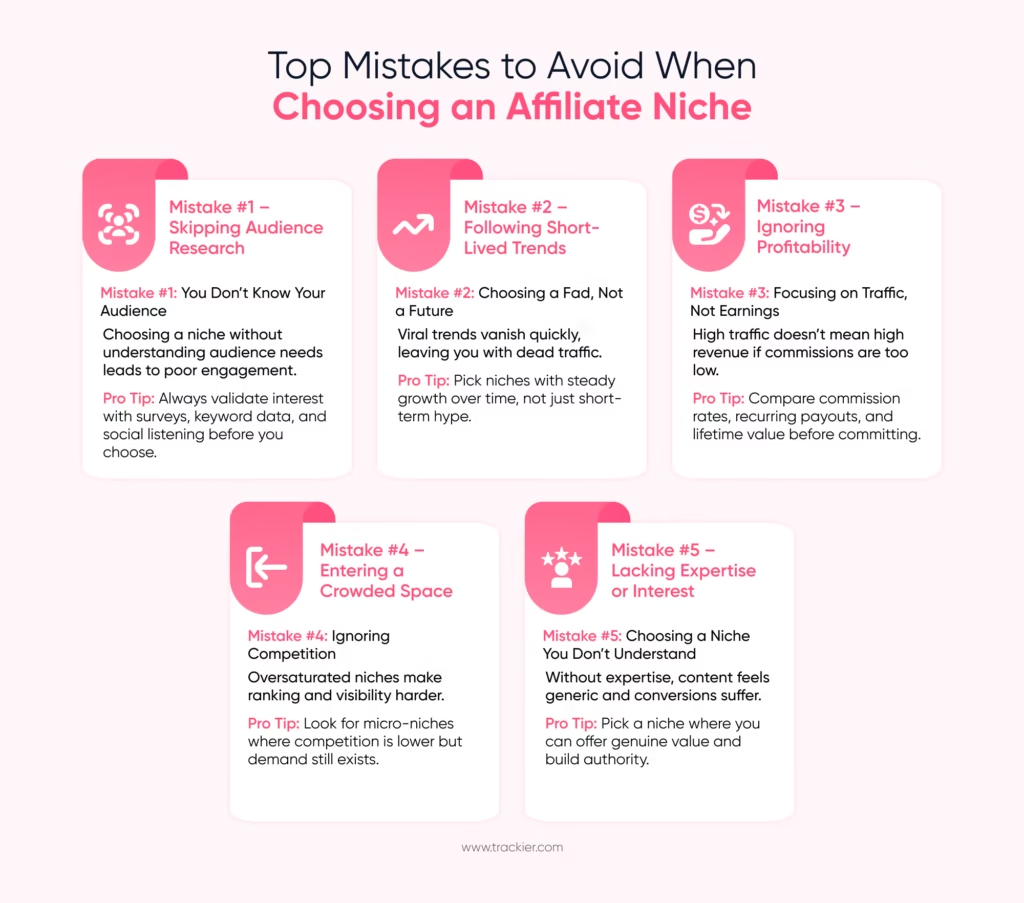
Where to Go From Here
Selecting an affiliate niche is the beginning of the process, not the final growth strategy. The niche influences your content, audience, programme options, and revenue model, but performance depends on how effectively those elements work together.
Start with one clearly defined audience and a small group of relevant products. Validate demand, programme quality, and conversion performance before expanding into additional sub-niches.
Now that you know what separates strong affiliate niches from risky ones, here’s what you should do next:
- Validate before you dive in. Use tools like Google Trends, SEMrush, or Ahrefs to see if interest in your niche is rising and what the competition looks like.
- Start small, scale fast. Don’t spread yourself across too many products or categories at the start. Focus on one high-potential sub-niche, build authority, and expand once you’ve gained traction.
- Measure and iterate. Track key metrics like CTR, EPC, and conversion rate. If a niche isn’t delivering, don’t hesitate to refine your approach or pivot.
- Compare programme economics. Review approved payouts, conversion rates, attribution rules, reversals, recurring revenue, compliance requirements, and customer value before scaling a category.
And remember, the real growth happens when great niche choices meet reliable affiliate tech. A platform like Trackier helps you manage partners, track conversions, and optimize campaigns in one place. It helps you focus on strategy instead of manual, time-consuming tasks.
By consistently providing value in the best affiliate niches, you position your business to thrive in a competitive, performance-driven market.
Hungry for more? Download our free case studies that cover real stories.
Or sign up for Trackier’s newsletter to get weekly best practices on referral programs and partner marketing.
FAQs
1. Which are the best affiliate niches for affiliate marketing?
The best affiliate niches depend on your audience, expertise, and income goals, but categories like finance and investing, health and wellness, AI tools, and online education consistently outperform others. These niches combine high demand with strong commission rates, recurring revenue potential, and long-term growth. Choosing a niche with sustainable interest ensures stable conversions and reliable earnings.
2. Which affiliate niches have high demand?
Niches that address recurring needs or major consumer pain points usually see the highest demand. In 2026, personal finance, fitness and wellness, AI-powered productivity tools, and eco-friendly living are among the fastest-growing areas. These sectors attract large, engaged audiences actively searching for solutions, making them ideal for affiliates who want consistent traffic and steady revenue potential throughout the year.
3. What is the highest-paying niche?
Finance and investing remain the highest-paying affiliate niche, often offering commissions from $50 to over $500 per sale for products like credit cards, trading platforms, and insurance plans. Other lucrative categories include B2B SaaS, enterprise software, and web hosting, where high customer lifetime value (LTV) and recurring subscriptions lead to substantial earnings and long-term passive income opportunities for affiliates.
4. What are the three main affiliate niches?
Most affiliate programs fall into three major niches: Wealth, which includes finance, investing, and business growth; Health, which covers fitness, nutrition, and wellness; and Relationships, which spans dating, parenting, and lifestyle. These categories are evergreen, attract massive audiences, and support numerous profitable sub-niches, making them ideal starting points for affiliates looking to build sustainable income streams over time.
5. How do I pick a niche?
Choosing the right affiliate niche starts with understanding audience demand, profit potential, and your personal expertise. Research search trends and market size, analyze commission structures, and study your competition. Then, narrow down to a niche you can speak about authentically and consistently. A topic that aligns with your strengths and solves real user problems has the highest chance of long-term success.